Table of Contents
ToggleBedroom curtains do more than frame a window, they set the mood for your sleep sanctuary, control light and temperature, and anchor your room’s aesthetic. Whether you’re starting from scratch or refreshing tired drapes, choosing the right curtain design means balancing style, function, and practicality. This guide walks you through fabric options, color psychology, installation methods, and current design trends to help you select bedroom curtains that work for your space, your lifestyle, and your eye.
Key Takeaways
- Bedroom curtain design balances light control, insulation, and aesthetic appeal, with blackout or room-darkening fabrics essential for quality sleep.
- Choose fabric based on function: blackout fabrics block 99% of light ($8–$15/yard), linen-cotton blends offer breathability and ease of care ($10–$18/yard), and velvet provides luxury insulation ($15–$25/yard).
- Cool neutrals and warm-toned fabrics promote restfulness, while solid colors or minimal patterns work best in small bedrooms, saving large spaces for geometric designs and textures.
- Mount curtain rods 4–6 inches above the window frame and extend 8–12 inches beyond each side to maximize height perception and prevent light leakage.
- Layering lightweight curtains with hidden blackout panels offers budget-friendly flexibility, allowing you to switch between daytime style and nighttime light control.
- Trending bedroom curtain designs emphasize minimalist floor-to-ceiling panels in warm neutrals, textured natural fibers like linen-cotton blends, and sustainable materials that age gracefully.
Understanding Curtain Styles and Fabrics
Curtain style encompasses both the visual treatment (how the drapes hang and move) and the fabric composition underneath. Common styles include rod-pocket curtains (fabric threaded directly onto the rod), grommet-top curtains (metal eyelets for a modern look), pinch-pleat drapes (tailored folds for formal settings), and sliding panels (contemporary, space-efficient). Each style affects how the curtain hangs, how easily it opens and closes, and the overall visual weight in the room.
The fabric you choose matters just as much as the cut. Heavy fabrics like velvet, linen blends, and canvas provide better light-blocking and insulation, critical for bedroom sleep quality. Mid-weight options like cotton-polyester blends offer a good balance of light control and ease of care. Sheer fabrics (voile, linen, cotton lawn) let light filter through while maintaining privacy at a distance: they work best paired with blackout panels for nights.
Popular Fabric Options for Bedroom Curtains
Blackout fabrics are triple-woven or coated to block 99% of light, making them ideal if your bedroom gets early morning sun or street light. Most range from $8–$15 per yard depending on quality: budget brands exist, but they often wear thin or crack at creases after a few seasons.
Linen breathes well and has a natural, relaxed drape. It’s durable (easily lasting 5–7 years with care) but wrinkles intentionally, which reads as intentional texture, not neglect. Expect $12–$20 per yard and a dry-cleaning bill if you want crispness.
Velvet provides luxury weight and light absorption. Winter-appropriate weight velvet (16–20 oz) works: lighter versions can look cheap. Budget $15–$25 per yard: avoid brushed versions unless you’re committing to professional cleaning.
Cotton-polyester blends hit the sweet spot for most bedrooms: affordable ($6–$12 per yard), easy to wash, and reasonably opaque without the bulk of blackout fabric. Polyester adds durability and resists fading faster than 100% cotton.
Linen-cotton blends offer linen’s breathability with cotton’s ease of care. They drape well, age beautifully, and typically cost $10–$18 per yard.
Color and Pattern Selection for Bedroom Ambiance
Color psychology matters in the bedroom. Cool neutrals (soft grays, warm whites, muted blues, gentle greens) promote calm and restfulness, stick with these if sleep is your priority. Warmer tones (warm grays, taupes, soft creams) feel cozy without overstimulating. Bold colors or busy patterns can work if you’re pairing them with neutral walls or bedding, but they risk keeping your mind engaged when you should be winding down.
Pattern selection hinges on room size and existing décor. Small bedrooms benefit from solid colors or minimal, fine-scale patterns that don’t fragment the visual space. Larger rooms can handle geometric designs, florals, or texture-driven weaves without feeling overwhelming. If your bedroom walls are already patterned (wallpaper, an accent wall), go solid with your curtains to avoid visual noise.
Seasonal shifting is practical in bedrooms. Lighter fabrics and colors in summer (cotton voile, cream, pale blue) reflect heat and feel fresh. Heavier, warmer-toned fabrics in winter (velvet, wool blends, rust, charcoal) add insulation and warmth. You don’t need to replace panels, many DIYers keep two sets and swap seasonally. Professionals at Homedit often recommend pairing your curtain color with your bedroom’s natural light direction: north-facing rooms benefit from warm undertones, while south-facing spaces work with cooler palettes without feeling cold.
Functional Considerations for Sleep Quality
Light control is the primary function of bedroom curtains. Assess your room’s light exposure: does morning sun hit your bed, or is your window shaded by trees? Street lights or neighbors’ porch lights? This determines whether you need full blackout, room-darkening, or light-filtering options.
Full blackout requires blackout-lined or triple-weave curtains hung to cover the entire window (including the rod pocket or valance area) and extend several inches beyond the frame to block light leakage at the sides. This setup can lower room temperature by 5–10°F in summer and retain warmth in winter, reducing HVAC load.
Room-darkening (often called “dim-out”) blocks 50–75% of light. It works for bedrooms without extreme light sources and keeps the room visually lighter during the day.
Layering is the DIY workhorse approach: pair lightweight, attractive curtains with hidden blackout panels or roller shades behind them. This gives you flexibility, open the pretty panels during the day, close the blackout layer at night. It’s also the budget-friendly route if you’re not ready to commit to full blackout drapes.
Thickness and weight affect insulation. A single panel of standard-weight cotton won’t trap much air, but a pair of heavy panels (or lined panels with batting) can reduce drafts by 15–20%. If your bedroom runs cold or hot, consider thermal lining or a separate insulated layer. Also, ensure your curtain rod and mounting hardware can handle the weight, a 90-inch-wide, floor-to-ceiling velvet curtain weighs 20–30 pounds. Weak mounts will sag.
Design Trends and Modern Aesthetics
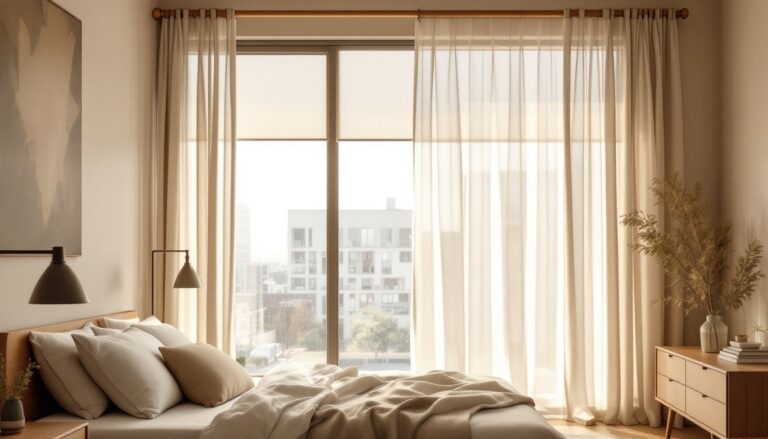
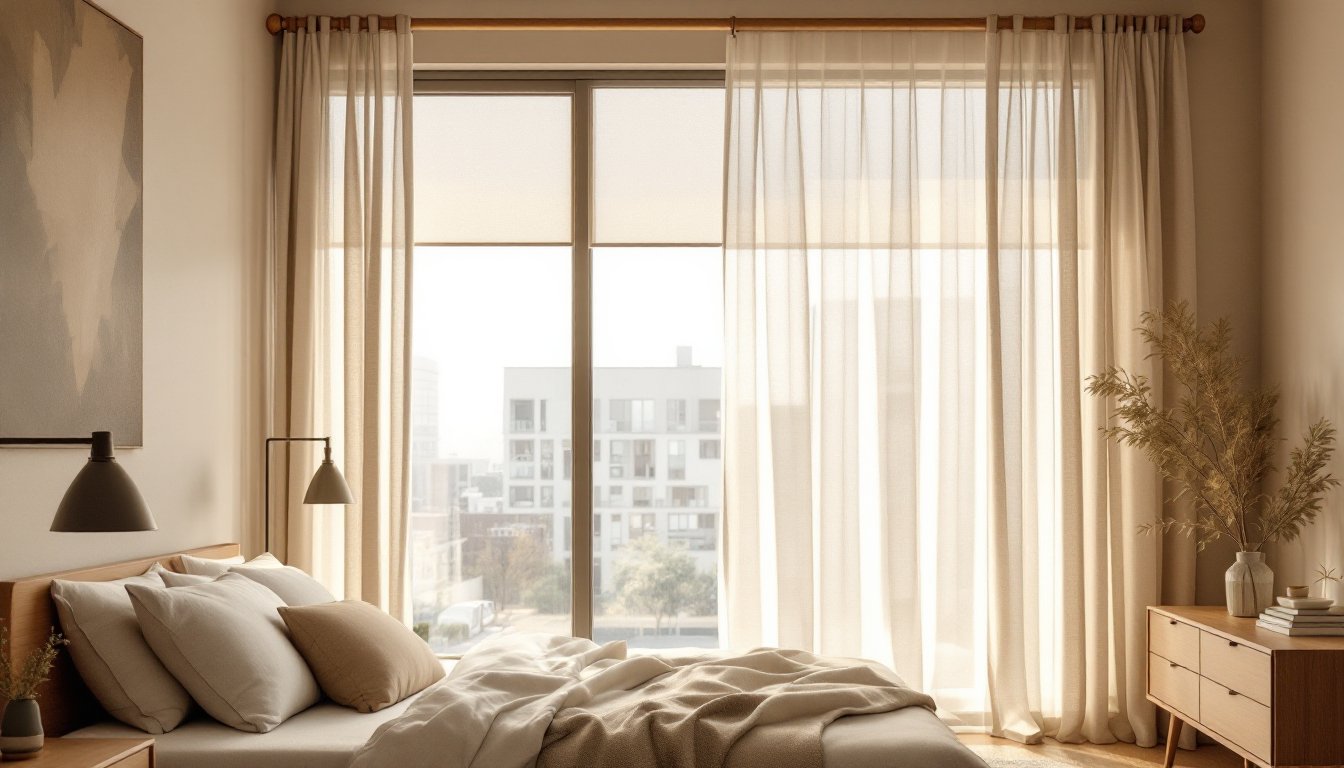
In 2026, bedroom curtain design leans toward minimalist, floor-to-ceiling panels in neutral solids. The appeal is visual calm, fewer distractions, clean lines, and a sense of spaciousness. Mounting the rod near the ceiling (even 4–6 inches above the window frame) tricks the eye into seeing a taller room. Sheer linen and cotton blends dominate the high-end market, paired with natural wood rods in oak or walnut tones.
Textural variety is also trending. Instead of flat weaves, consider fabrics with subtle ribs, slubs, or nubs that catch light and add depth without pattern. Linen-cotton blends excel here, as do loosely woven canvas and linen-wool blends.
Warm neutrals (cream, oatmeal, soft taupe, warm gray) are replacing cool whites and cool grays in contemporary design. This shift reflects a move away from stark, clinical bedrooms toward spaces that feel embracing and human. Designers at House Beautiful highlight that warm undertones in neutrals make bedrooms feel more welcoming without requiring bold color.
Double-hanging or asymmetrical layouts are appearing in master bedrooms. Hanging a lightweight panel on one side and layering a blackout shade or heavier panel creates intentional asymmetry, modern, functional, and visually interesting. It also solves light-control challenges on windows where one side gets direct sun.
Sustainable and natural fibers continue gaining traction. Organic cotton, linen from flax (fast-growing, low-pesticide), and Tencel (recycled wood pulp) appeal to eco-conscious homeowners. They typically cost 10–20% more but last longer and age gracefully. Avoid high-polyester “performance” fabrics in bedrooms unless you have severe moisture issues: they often feel plastic and off-gas.
Installation and DIY Tips for Hanging Curtains
Mounting height and width matter more than most people realize. Mount your rod 4–6 inches above the window frame to create the illusion of height. Extend it 8–12 inches beyond the window on each side (wider windows can go 12–15 inches) so the curtain clears the glass when fully open, this maximizes natural light and prevents light leakage around the edges.
Measure twice. Measure from the rod mounting point to where you want the curtain to end (sill, floor, or 1/2 inch above the floor for swiping without dragging). Panels should be 1.5 to 2 times the window width for proper fullness (the drape and fold of fabric). A 40-inch window needs 60–80 inches of fabric width: wider windows need proportionally more.
Hardware and brackets: Use a rod rated for the curtain weight. Most standard rods (1-inch diameter) support 20–30 pounds per bracket: heavier blackout or velvet panels may require reinforced brackets or a second center support. Brackets should be bolted into wall studs (or use mollies on drywall for serious hold). Studs are typically 16 inches on-center: find them with a stud finder or the knock-and-listen method.
Install brackets level using a 4-foot level. An off-level rod will drive you crazy and make one side of the curtain hang longer than the other. Mark your holes lightly with pencil: use a drill with a small bit to pilot-hole before screwing (prevents drywall damage) or to pre-drill for bolts into studs.
Hemming and customizing: If panels are too long, a bottom hem takes a weekend and a sewing machine (or needle and thread for a hand-stitched hem that reads handmade and intentional). Leave 1–2 inches of fabric above the rod to gather naturally. Use lead weights or weighted tape in the hem to help the curtain hang straight and reduce swaying.
DIY lining: If you buy unlined panels and want to add blackout or thermal backing, adhesive lining products exist, but sewing is more durable. A basic running stitch along the top and bottom (fabric glued or pinned before sewing) takes an evening and transforms light-filtering panels into room-darkening ones.
Washing and care: Pre-wash fabric before measuring and sewing, linen especially shrinks 5–10%. Check the curtain label for care instructions. Most quality panels are dry-clean recommended, but many homeowners hand-wash them in cool water and air-dry flat or hanging. Velvet and silk always go to the cleaners: cotton-poly blends are forgiving.
Resources like MyDomaine provide step-by-step visual guides for hanging and hemming, which is helpful if you’re new to level-mounting or sewing.
Conclusion
Bedroom curtains are both a functional and aesthetic choice. Prioritize light control and fabric quality for sleep, then layer in color and style that match your design goals. Whether you go minimal and neutral, textured and warm, or layered and flexible, the best curtains are the ones you’ll enjoy opening and closing for years to come. Measure carefully, mount securely, and don’t skip the prep work, properly hung, quality curtains transform a bedroom from functional to restful.