Table of Contents
ToggleA bathroom mirror is often the most-used surface in your home, yet it’s frequently treated as an afterthought. Beyond reflecting your face, a well-chosen mirror can visually expand a small bathroom, anchor your décor, and set the tone for your entire routine. Whether you’re updating an existing mirror or tackling a full bathroom refresh, the right design choice combines aesthetics with practical function. This guide walks you through selecting the perfect bathroom mirror, from shape and size to frame materials, lighting integration, and smart features, so you’ll end up with a choice you’ll appreciate every single day.
Key Takeaways
- A well-chosen bathroom mirror design can visually expand small spaces, anchor your décor, and enhance your daily routine by combining aesthetics with practical function.
- Mirror size should be at least two-thirds the width of your vanity, with a standard mounting height of 48 to 65 inches from the floor to the center—oversized mirrors make bathrooms feel larger by reflecting light.
- Frame materials like wood, metal (brass and gold are trending for 2026), and composite options should coordinate with your faucets and fixtures to avoid clashing finishes.
- Proper lighting is essential: position side sconces 24 to 30 inches apart at eye level, use LED bulbs with 3,000 to 4,000 Kelvin color temperature, and consider dimmers for versatility.
- Installation requires precise measurement, stud location, and proper caulking to prevent water damage, while smart mirrors and anti-fog features are practical upgrades for specific needs rather than necessities.
- Budget-friendly bathroom mirror transformations start under $200 with frameless mirrors and LED sconces, and can be enhanced further through frame overlays, salvage finds, or coordinating wall improvements.
Choosing the Right Mirror Shape and Size
Mirror shape and size are foundational decisions that affect both function and visual balance. The most common choice is a rectangular mirror mounted horizontally above the vanity, it’s practical, versatile, and works in tight spaces. But, round or oval mirrors add softness and visual interest, especially in modern or transitional designs. Square mirrors offer clean lines for contemporary bathrooms.
Size matters more than you’d think. A mirror should be at least two-thirds the width of your vanity: oversized mirrors (wall-to-wall or nearly) make small bathrooms feel larger by reflecting light and creating depth. Measure your vanity width and the vertical space above the countertop before shopping. Standard mounting height is 48 to 65 inches from the floor to the mirror’s center, which works for most adults. If your household includes children or wheelchair users, adjust placement accordingly.
Consider the bathroom’s overall proportions. In a narrow powder room, a tall vertical mirror draws the eye upward and makes the space feel taller. In a master bath with ample wall space, matching his-and-her mirrors flanking a central vanity or a large statement mirror creates symmetry and balance. Don’t shy away from asymmetrical designs, off-center or uniquely shaped mirrors can become a focal point and add personality.
Modern Frame Materials and Finishes
A frame transforms a simple mirror into a design statement. Frameless mirrors offer a clean, contemporary look and make bathrooms feel open and airy, great for small spaces. They’re also easier to clean and don’t trap dust or humidity around edges. If you want a frameless option, choose tempered glass for safety and durability.
Wooden frames bring warmth and texture. Oak, walnut, and reclaimed wood are popular choices, though wood requires periodic sealing in humid bathroom environments to prevent warping. Painted wood frames (white, matte black, or custom colors) work beautifully in farmhouse, modern, and eclectic designs. Always use moisture-resistant paint and sealant rated for bathrooms.
Metal frames, brushed nickel, oil-rubbed bronze, brass, and matte black, coordinate easily with faucets and fixtures. Brass and gold finishes are on-trend for 2026 and pair well with marble, stone, and warm wood tones. Ensure metal frames are corrosion-resistant: cheap electroplated finishes deteriorate quickly in high-moisture areas.
Composite and resin frames offer affordability and durability, though they lack the premium feel of solid wood or metal. Ceramic tile or mosaic-framed mirrors add artisan flair and work especially well in eclectic or Mediterranean-inspired designs. Choose finishes that echo your faucets, lighting fixtures, and hardware for a cohesive look, a common mistake is picking a frame finish that clashes with your existing fixtures.
Lighting Considerations for Bathroom Mirrors
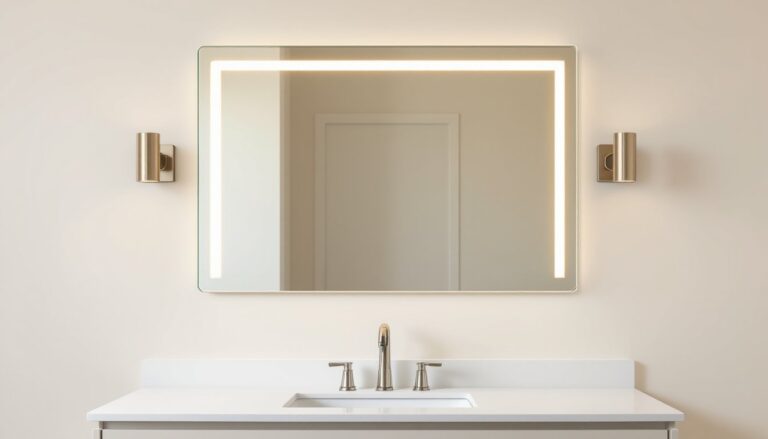
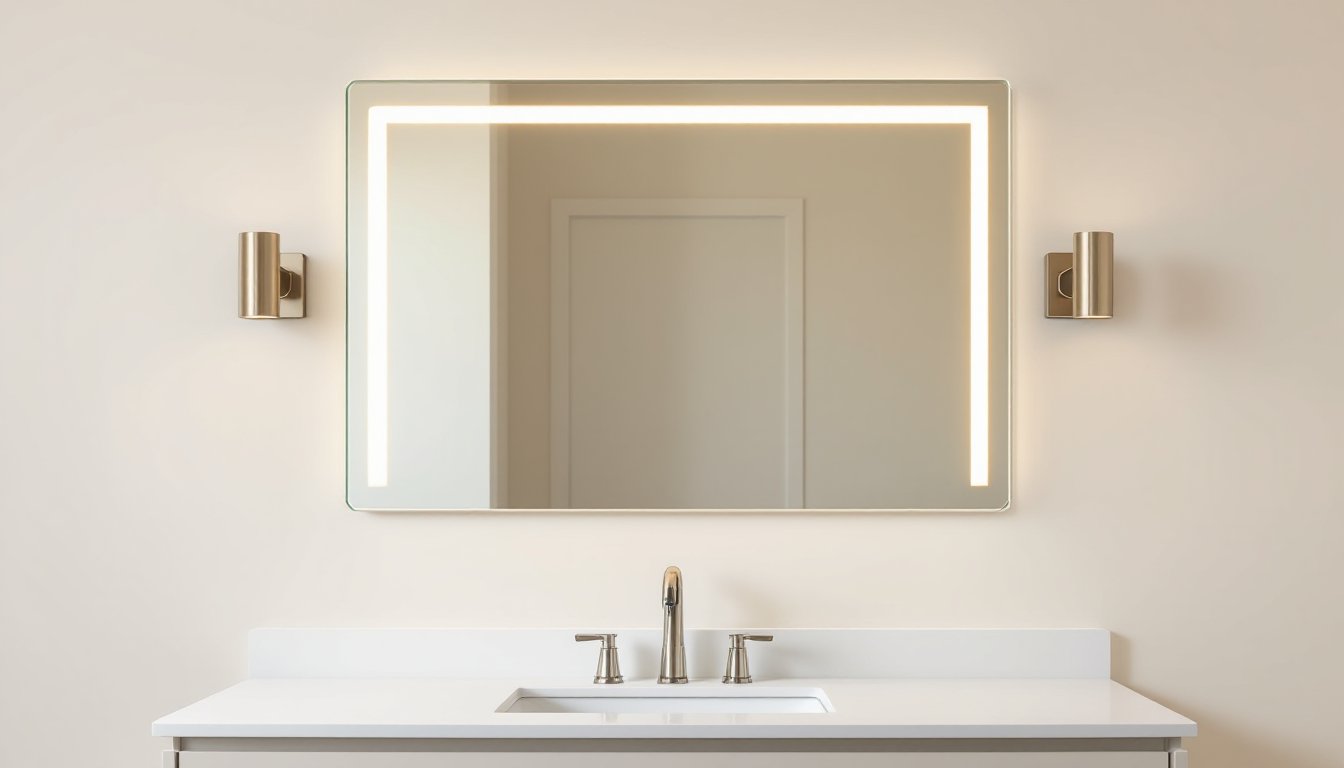
Bathroom mirrors and lighting are inseparable. Side sconces (mounted 36 to 40 inches from the floor, flanking the mirror) provide flattering, shadow-free light for grooming and makeup application. A single overhead fixture centered above the mirror works in smaller bathrooms but can cast shadows. Combine methods, overhead plus sconces, for optimal coverage in larger spaces.
LED bulbs are the practical choice: they run cool, last years, and consume less energy than incandescent or halogen options. A color temperature of 3,000 to 4,000 Kelvin mimics natural daylight and prevents the harsh, unflattering glow of overly warm or blue-tinted lights. Dimmers let you adjust brightness for different times of day and add luxury without breaking the budget.
Mirror-integrated lighting is increasingly popular. Back-lit LED strips mounted behind the frame create ambient glow and reduce harsh shadows. Vanity mirrors with built-in LED rings or edge lighting (often 24 to 40 watts) eliminate the need for separate wall sconces, though they require a plug or hardwired connection. These integrated options work best in master baths with dedicated electrical circuits. Check product specs for moisture-resistance ratings, bathroom fixtures must be listed for wet or damp locations per the National Electrical Code (NEC).
If you’re installing new sconces, position them at eye level on either side of the mirror, 24 to 30 inches apart, for balanced illumination. Avoid mounting them too far above or below the mirror, which creates shadows across the face.
Smart and Functional Mirror Features
Smart mirrors represent the newest frontier in bathroom design. These mirrors combine reflective glass with embedded screens, speakers, and sensors, displaying weather, news, time, and even fitness reminders. Some connect to voice assistants (Alexa, Google) for hands-free control. High-end options include anti-fog technology, adjustable color temperature lighting, and even health-tracking features.
For most homeowners, smart mirrors are a luxury upgrade rather than a necessity. They range from $500 to $3,000+ depending on features and build quality. Installation requires careful planning: electrical outlets positioned behind the mirror, sturdy wall framing to support weight (smart mirrors are heavier than standard ones), and potentially hiring an electrician. Budget accordingly and ensure your bathroom’s electrical service can handle additional loads.
Fog-resistant mirrors are far more practical for everyday use. Anti-fog coatings or heated mirror backs prevent condensation, making grooming easier after hot showers. These typically cost $100 to $400 and are worth considering if you deal with chronic bathroom moisture. They require a power supply (hardwired or plug-in) for the heating element.
Magnified mirrors (10x or 15x magnification) mounted on swivel arms are excellent for detailed grooming but shouldn’t be your primary mirror, they’re best as supplementary fixtures beside the main mirror. Tilt mirrors mounted on pivot hinges offer flexibility for family members of different heights and are especially useful in shared bathrooms. Exploring smart mirror options helps you understand whether integrated technology aligns with your bathroom’s use and your budget.
Installation Tips and Placement Strategy
Installation begins with careful measurement and planning. Locate studs in the wall using a stud finder, ideally, you’ll anchor the mirror to at least one stud for secure mounting. Mark the centerline of your vanity and the mirror’s mounting height with a level and painter’s tape. Take your time here: a crooked mirror is immediately noticeable and aggravating to fix.
For frameless mirrors, use heavy-duty mirror adhesive or specialized mirror mounting clips rated for bathroom use. Mirror adhesive requires patience (curing takes 24 hours) and perfect wall prep: the wall must be clean, dry, flat, and primed if it’s porous. Any dust or moisture under the mirror will cause adhesion failure. Wall clips provide reassurance (especially in older homes with uneven walls) and allow adjustment before permanent mounting.
Framed mirrors typically mount via pre-drilled holes and screws. Use toggle bolts or heavy-duty wall anchors if studs aren’t available, but if you’re installing a large, heavy mirror without hitting a stud, seriously consider locating one or using specialized drywall anchors rated for the mirror’s weight. A mirror that falls from a bathroom wall is a safety hazard and a costly mistake.
Waterproofing the area behind and around the mirror is critical. Apply caulk (acrylic or silicone rated for bathrooms) where the mirror meets the wall and vanity. Proper caulking prevents water from seeping behind the mirror and damaging drywall or studs. Replace caulk every 2 to 3 years or when you notice cracking or mold.
Electrical work (for sconces, heated mirrors, or integrated lighting) should follow local electrical codes and may require a permit. If you’re uncomfortable running new circuits or installing hardwired fixtures, hire a licensed electrician. Most areas require bathroom lighting to be on GFCI-protected circuits per the IRC (International Residential Code), so don’t improvise.
Budget-Friendly Design Ideas
A beautiful bathroom mirror doesn’t require a premium price tag. A basic frameless mirror from a home center costs $30 to $80: pair it with inexpensive, correctly-positioned LED sconces ($15 to $40 each) and you’ve achieved good function and a clean look for under $200. Paint an existing wooden frame to refresh it, primer, bathroom-grade paint, and polyurethane sealer run $30 to $50 and transform dated mirrors.
Sourcing from salvage yards or online marketplaces (Facebook Marketplace, Craigslist, estate sales) yields unique framed mirrors for a fraction of retail price. A vintage wooden or brass-framed mirror adds character and authenticity that new production mirrors often lack. Just inspect thoroughly for damage and verify the glass is intact before committing.
Mirror upgrades pair well with other affordable bathroom improvements. A fresh coat of paint on walls, new cabinet hardware, or simple tile work around the vanity enhances the mirror’s impact. Consider what you’re replacing: if your existing mirror is in decent condition, a frame overlay (installing a new frame around the old mirror) costs $40 to $100 and feels like a total refresh.
Mirrored furniture and design elements extend the reflective, light-bouncing benefits of mirrors throughout your bathroom. A small mirrored cabinet or shelf beside the vanity amplifies brightness and adds practical storage, often cheaper than a larger primary mirror and equally impactful. DIY enthusiasm and patience, not deep pockets, yield the best bathroom transformations.
Conclusion
Your bathroom mirror is far more than a functional necessity: it’s a design anchor that influences how you experience your space daily. Start with size, shape, and placement that suit your bathroom’s proportions and your household’s needs. Choose frame materials and finishes that coordinate with fixtures and reflect your personal style. Plan lighting carefully, it transforms the mirror from a passive surface into an active, flattering workspace. Consider smart features and extras (anti-fog, magnification, integrated LED) based on realistic use, not gadget appeal. Execute installation with precision, prioritize waterproofing, and know when to call in professionals. Whether you’re refreshing a tired mirror or designing from scratch, thoughtful choices today will reward you with daily satisfaction and a bathroom you genuinely enjoy.