Table of Contents
ToggleYour bathroom sink is more than a utility, it’s often the focal point of the room and a place where form and function meet daily. Whether you’re planning a full renovation or refreshing an outdated vanity, understanding the options available in bathroom sink design can transform your entire space. From sleek pedestal designs to spacious dual vanities, 2026 brings fresh styles that blend durability with contemporary aesthetics. This guide walks you through the types, materials, trends, and practical choices that’ll help you pick the perfect sink for your home.
Key Takeaways
- Bathroom sink design comes in three main styles—pedestal, vanity, and wall-mounted—each offering different storage, space, and aesthetic benefits depending on your bathroom size and needs.
- Ceramic and porcelain sinks are affordable and practical for high-traffic bathrooms, while stone requires annual sealing but delivers luxury; quartz composites offer a durable middle ground without maintenance demands.
- 2026 bathroom sink trends favor minimalism, warm metallics, sculptural organic shapes, and dual vanities, with sustainability through recycled materials and low-flow fixtures gaining momentum.
- Swapping your faucet is a budget-friendly weekend DIY project that visually refreshes the entire sink area, while vanity refinishing and countertop overlays provide affordable updates without full replacement.
- Prioritize quality faucet hardware in solid brass or stainless steel over plated finishes to prevent leaks, and match finishes to 2026 styles like matte black, brushed nickel, or warm brass for cohesive design.
- Hiring a licensed plumber for complex plumbing work prevents costly water damage, especially in older homes with cast iron supply lines or unusual drain configurations.
Types of Bathroom Sinks: Finding the Right Fit for Your Space
Pedestal, Vanity, and Wall-Mounted Options
The three main sink categories each solve different problems. A pedestal sink stands alone on a slender column, exposing your floor and making the bathroom feel more spacious. They work beautifully in small or vintage-leaning bathrooms, though they offer zero storage underneath and can look awkward if your pipes are visible. Pedestal sinks typically measure 24–30 inches wide and cost $150–$500 installed.
A vanity sink combines the basin with cabinetry below, giving you storage and a solid countertop surface. Vanities run 24–60 inches wide (single or double), handle high traffic well, and suit nearly any bathroom size. They’re the workhorse choice for most homeowners: expect to spend $300–$2,000+ depending on material and quality. Wall-mounted or floating sinks hang directly to studs, eliminating the pedestal and creating clean lines. They demand solid framing, you’ll need to anchor to 2×6 or 2×8 studs with heavy-duty brackets rated for 100+ pounds. Floating sinks offer a modern edge and are ideal for tiny bathrooms, but they leave plumbing visible underneath unless you install a decorative panel.
Choose based on your space, storage needs, and design vision. A cramped powder room might call for a pedestal: a busy family bath needs the storage of a vanity.
Materials and Finishes: Durability Meets Aesthetics
Ceramic, Stone, and Modern Composites
Ceramic and porcelain are the most common and affordable materials. Vitreous china (a glazed ceramic) resists staining and scratches, cleans easily, and costs $80–$400 for the basin alone. Glazed finishes can crack or chip if hit hard, so they suit low-traffic guest baths better than kids’ bathrooms. Porcelain edges the ceramic category for durability, offering better chip resistance.
Stone sinks, marble, granite, or slate, deliver luxury and durability but demand care. Natural stone is porous and stains if not sealed annually. Granite is tougher than marble: marble scores easier and requires sealing every 6–12 months. Stone sinks run $500–$2,000+ and weigh heavily (important for vanity support and installation). They suit master baths and design-forward spaces where you’ll invest in proper maintenance.
Solid-surface and composite materials (acrylic blends, quartz composites, cultured marble) offer a middle ground. Quartz composites are non-porous, resist stains, and never need sealing, ideal for busy bathrooms. They’re engineered for durability, typically last 15+ years with basic care, and cost $300–$900. Modern composites let you mimic stone aesthetics without the maintenance burden. Your choice depends on traffic, maintenance tolerance, and budget. A high-traffic guest bath? Go ceramic. A low-use master retreat? Stone works beautifully if you’ll seal it.
Current Design Trends in Bathroom Sinks
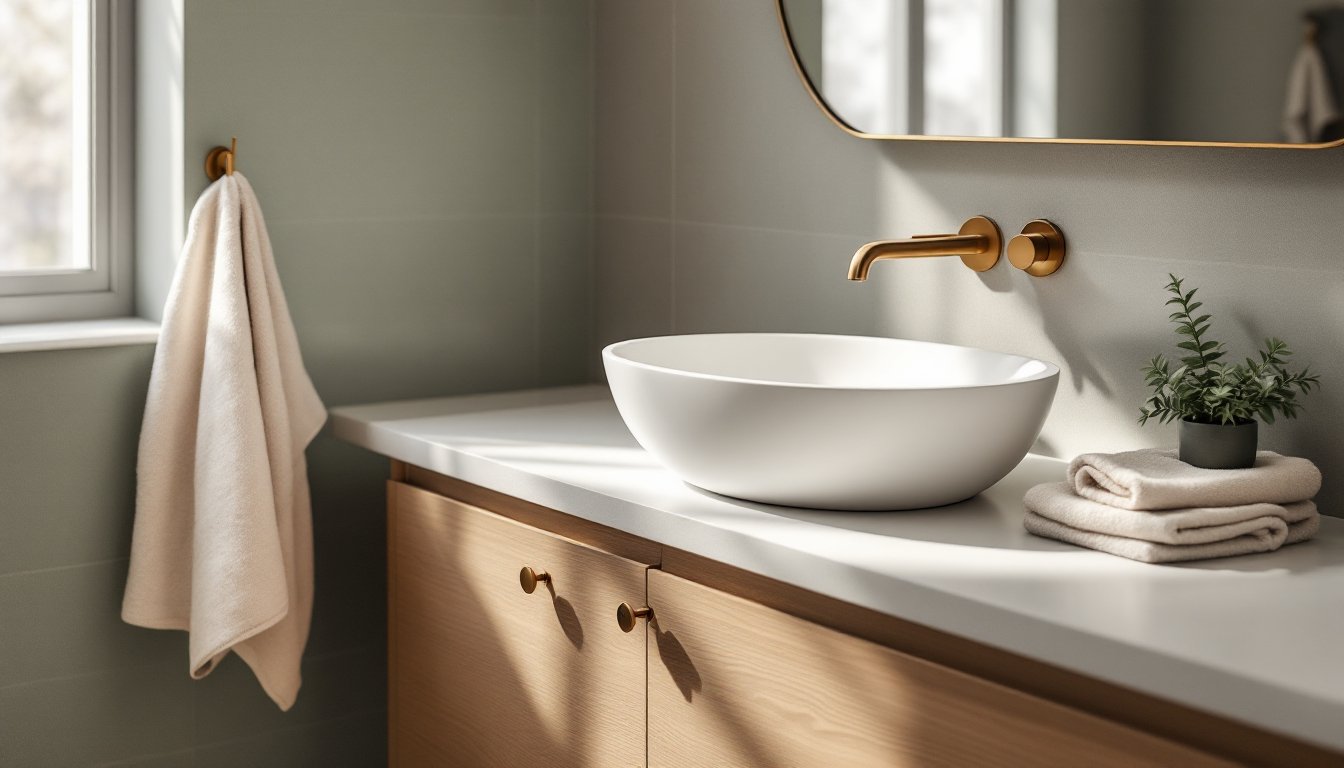
2026 shifts bathroom design toward minimalism and natural materials. Sleek, integrated sink-countertop designs (like concrete or solid-surface pour-overs) dominate upscale renovations. Warm metallics, brushed brass, matte gold, and warm bronze, pair beautifully with muted tile and soft, earthy tones replacing stark whites.
Designers are embracing asymmetrical and sculptural forms. Gone are the days of purely round or rectangular basins: curved, bowl-like sinks and organic, almost hand-thrown shapes signal intentional design. Dual vanities continue trending, especially in homes with two working adults: dual sinks reduce morning conflicts and add luxury appeal without requiring a sprawling footprint. Experts featured on Houzz’s bathroom sink guides showcase how mixing high-low materials, a pricey natural stone countertop paired with a modest ceramic basin, delivers impact at mid-range budgets.
Sustainability is gaining traction too. Recycled glass, reclaimed wood vanities, and low-flow faucets appeal to eco-conscious homeowners. Matte and textured finishes (rather than high-gloss) reduce fingerprints and feel less sterile. Expect to see more integrated shelving around floating sinks and hidden storage built into vanity toe-kicks. These trends appear across platforms like HGTV and design-forward publications, confirming that bathrooms are shedding their purely utilitarian reputation.
Choosing the Perfect Faucet and Hardware
Your faucet choice matters as much as the sink itself. Single-hole, widespread, and wall-mounted faucets each demand different sink prep and plumbing work. A single-hole faucet (all controls integrated into one spout) fits pre-drilled single-hole sinks and requires minimal plumbing, ideal for retrofits. Widespread faucets use three holes (one for each handle and the spout), offering more precise water control and a traditional aesthetic. Wall-mounted faucets look chic and free up counter space but demand solid backing and visible plumbing lines.
Faucet finishes should coordinate with your vanity hardware. Matte black, brushed nickel, and warm brass dominate 2026. Avoid shiny polished chrome in high-traffic bathrooms, fingerprints show constantly. Material matters for longevity: solid brass or stainless steel holds up better than plated finishes that can peel. A quality faucet costs $150–$600: cheaper models ($40–$80) often leak within 3–5 years. Pay attention to water pressure ratings: if your home has low pressure, choose a faucet with an aerator rated for 1.5 GPM (gallons per minute) or lower.
Don’t skimp on installation hardware either. Heavy-duty mounting bolts, locknut washers, and supply line connectors vary in quality. Request stainless steel or brass hardware: avoid plain steel that rusts. If you’re unsure about plumbing connections, hire a licensed plumber, improper faucet installation causes leaks that damage vanity bases and subfloors within months.
Budget-Friendly Design Tips for DIY Updates
You don’t need a full renovation to transform your bathroom. Swapping the faucet alone costs $150–$400 and visually refreshes the entire sink area, it’s a weekend project with basic plumbing skills. Use an adjustable wrench and basin wrench (a specialized tool for tight spaces under vanities) to remove the old supply lines and mounting hardware. Have towels ready: water will spill. Before installing the new faucet, check that your sink’s pre-drilled holes match the faucet’s footprint.
Refinishing or painting the vanity is another low-cost win. Clean the cabinet thoroughly, sand with 120-grit sandpaper, prime with bonding primer (crucial for laminate surfaces), and apply two coats of bathroom-grade paint. Avoid standard latex paint: choose semi-gloss or satin acrylic formulas rated for moisture. This approach costs $50–$150 in materials and can last 5–7 years if you maintain it.
Upgrading the countertop without replacing the sink saves money. A new laminate or quartz overlay costs less than full replacement and installs directly over the existing surface, provided it’s structurally sound. If your current sink is ceramic and in good condition, keep it and redirect budget to new hardware, lighting, and tile.
For DIY sink installation, confirm your skill level first. Removing an old vanity takes basic tools and a few hours: installing a new one requires plumbing and carpentry competence. If your home has cast iron supply lines (older homes) or unusual drain configurations, consult a plumber before committing. Resources like Remodelista’s bathroom guides detail step-by-step overhauls and budget breakdowns, helping you prioritize what to DIY and where hiring saves money and headaches.
Final Thoughts: Making Your Choice
Selecting the right bathroom sink balances style, durability, and your budget. Consider your space size, daily usage, maintenance willingness, and design goals before committing. A small investment in a quality faucet or new vanity refresh pays dividends in daily satisfaction. Start with what matters most, storage, durability, or visual impact, and build your design around that priority. Your bathroom will thank you.