Table of Contents
ToggleWhether you’re tackling a full kitchen remodel or refreshing your bathroom, smart design makes the difference between a space that frustrates you daily and one that works beautifully. Bathroom and kitchen design aren’t just about picking colors or fixtures, they’re about understanding how you move through these rooms, what you actually need to store, and how to make every square foot count. This guide walks you through the core design principles that make both spaces functional, comfortable, and lasting. You’ll learn how to evaluate your current layout, identify what’s working (and what isn’t), and make decisions that blend practical workflow with visual appeal. Let’s dig in.
Key Takeaways
- Functional bathroom and kitchen design starts with the work triangle in kitchens (15–26 feet total distance between sink, stove, and refrigerator) and proper moisture zoning in bathrooms to prevent costly water damage.
- Accurate space measurement, understanding your layout type (galley, L-shaped, U-shaped, island), and respecting existing plumbing runs will save thousands in unnecessary renovation costs.
- Storage solutions like pull-out organizers, deep drawers, and handleless cabinets streamline workflow and create the illusion of more space in both kitchens and bathrooms.
- Task lighting, proper ventilation, and moisture-resistant materials (cement board, sealed grout, matte tile) are non-negotiable for lasting, functional bathrooms and kitchens.
- Kitchen workflow should follow the natural sequence of food prep—from pantry to fridge to prep counter to stove—to eliminate wasted steps and poor ergonomics.
- Small bathroom design benefits from floating vanities, large-format tiles, corner mirrors, and recessed shelving that maximize both storage and the perception of space.
Key Design Principles for Both Spaces
Functionality Meets Aesthetics
The biggest mistake homeowners make is prioritizing looks over how a space actually works. That beautiful marble island might photograph well, but if it blocks your view of the stove or crowds the galley, it’s a liability. Real design starts with the work triangle in kitchens, the imaginary line connecting your sink, stove, and refrigerator. Ideally, the total distance should be between 15 and 26 feet: anything tighter feels cramped, anything longer feels inefficient.
In bathrooms, think about the wet zone, the toilet, tub, and shower area, separate from grooming tasks at the vanity. Good design keeps wet splash away from drywall and flooring where water damage starts creeping in. Function shapes aesthetics naturally: a well-planned layout looks clean and intentional, while a poorly planned one looks cluttered no matter how many gold fixtures you add.
Working With Your Layout
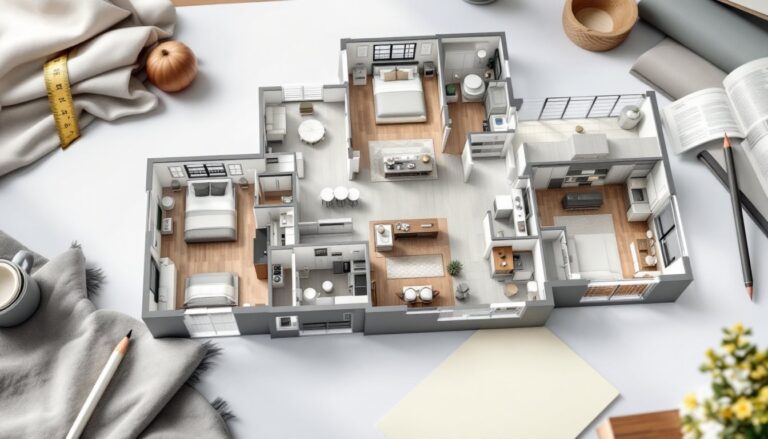
Before shopping for anything, measure your space accurately. Use a tape measure and sketch it on grid paper or use a free tool like Google Sketchup or kitchen design inspiration galleries. Mark window locations, door swings, and existing plumbing runs, moving plumbing in a kitchen or bathroom costs thousands and requires permits.
Identify your layout type: galley (two parallel walls), L-shaped, U-shaped, single-wall, or island. Each has trade-offs. A galley maximizes counter space in a small footprint but can feel narrow. An island adds counter space and seating but needs at least 42 inches of clearance on all sides for comfortable movement. In bathrooms, consider the doorway swing: does it hit the toilet? Does the vanity door open into the tub? These oversights become daily annoyances. Existing plumbing and electrical runs constrain your options, but they’re not absolute, just expensive to move.
Kitchen Design Essentials
Storage Solutions and Workflow
Storage often determines whether a kitchen functions or frustrates. Start by auditing what you actually have: pots, pans, dishes, appliances, pantry items, and small gadgets. Too many kitchens have cabinets stuffed to bursting while unused space hides above or below.
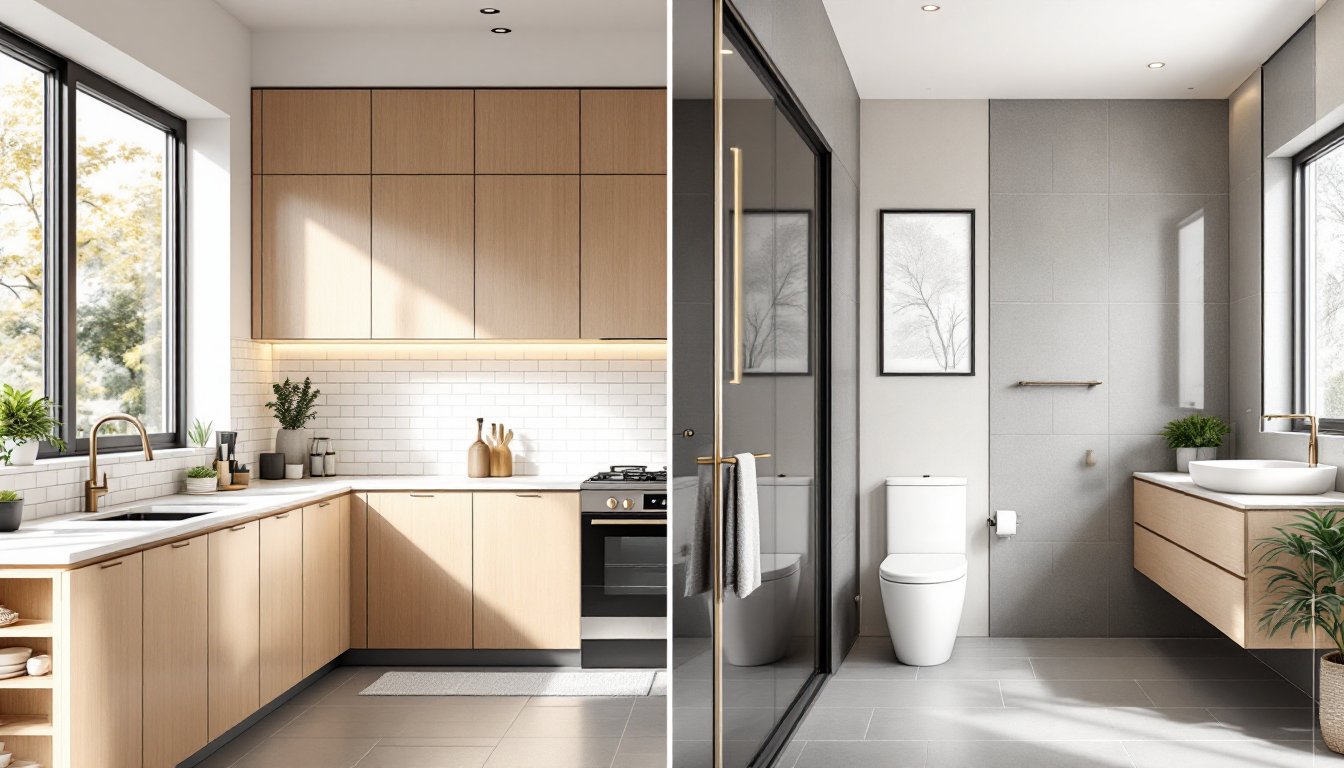
Modern solutions like pull-out organizers, deep drawers instead of traditional base cabinets, and open shelving (for items you actually use daily) streamline access. Handleless cabinet doors have become standard in contemporary design, they reduce visual clutter and work well in smaller spaces where handle protrusion steals inches. Deep pantries or walk-in closets dedicated to food storage beat scattered drawers.
Workflow follows the task sequence: unload groceries near the pantry and fridge, prep at the counter near your sink, cook at the stove, plate at a counter near the stove, and serve. Interrupting this flow, like placing the sink on the opposite wall from prep counter, creates wasted steps and poor ergonomics. Recent kitchen design trends emphasize mixed materials and flexible zones that adapt to how people actually cook today: multiple prep stations, beverage stations separate from main cooking, and dedicated coffee/breakfast bars.
Countertop surface matters too. Granite and quartz are durable and look polished, but butcher block warms a space and feels more lived-in. Tile is budget-friendly but grout lines trap debris. Laminate has improved dramatically and handles moisture well in kitchens, don’t dismiss it for secondary surfaces. Material choice should match your cooking habits and willingness to maintain: marble requires sealing and stains easily, but it’s beautiful if you’re okay with character marks over time.
Lighting deserves attention. Task lighting over the sink and stove prevents you from working in your own shadow. Ambient overhead lighting at 2700K color temperature feels warm and inviting, while 4000K reads too clinical for a gathering space. Under-cabinet LEDs have become affordable and transform a dark counter into functional, pleasant workspace, standard in most modern kitchens now.
Bathroom Design Fundamentals
Maximizing Space and Comfort
Bathroom design hinges on understanding moisture control and zoning. Moisture spreads beyond visible water, shower spray and humidity travel several feet. A poorly sealed shower area with drywall nearby guarantees mold and rot within years. Standard practice uses cement board (not regular drywall) behind tile in wet areas, with proper slope to drains and a vapor barrier behind walls. Ventilation, an exhaust fan running during and 20 minutes after showers, is non-negotiable, not optional, especially in bathrooms without windows.
Small bathrooms require ruthless efficiency. A corner pedestal sink saves floor space compared to a full vanity, but you lose storage and counter surface for everyday items. A narrow floating vanity with storage below gives you both. Handleless cabinet design works beautifully in small bathrooms, creating the illusion of more space by eliminating visual clutter from protruding hardware. A large mirror paired with recessed shelving above the toilet reclaims wasted wall space for storage.
Tile choices impact both aesthetics and safety. Glossy tile looks modern but becomes slippery when wet, use matte or textured finishes on floors, especially in showers or around tubs. Grout lines, while they create visual rhythm, are porous and trap moisture unless sealed. Larger format tiles (12×24 inches or bigger) have fewer grout lines, reduce maintenance, and make compact spaces feel less cramped.
The toilet location matters more than most realize. Building codes typically require at least 15 inches from the toilet’s centerline to a wall or obstruction on each side, measure this first or you’ll discover the problem during installation. Venting also has rules: the drainpipe must slope at least 1/4 inch per foot toward the main stack, and a P-trap on every fixture prevents sewer gases from entering. These aren’t suggestions: they’re code requirements that vary by jurisdiction.
Hot water delivery affects bathroom comfort. A small recirculation pump ($200–400) ensures hot water reaches your shower in seconds rather than minutes, saving water and reducing wait time. Thermostatic mixing valves prevent scalding and can save energy, they reduce water use by eliminating the temperature-seeking adjustment ritual many of us do daily. Design integration matters here: a remodeling resource like Remodelista shows how contemporary bathrooms balance functional systems with clean aesthetics, hiding mechanical elements behind cabinets or walls rather than exposing them awkwardly.