Table of Contents
ToggleThe modern bathroom isn’t just about functionality anymore, it’s become one of the most transformative spaces in a home. Whether you’re doing a full renovation or strategically refreshing key elements, today’s design trends emphasize clean aesthetics, intelligent technology, and purposeful storage that actually works. The shift toward minimalism, paired with smart features and thoughtful materials, has opened up real opportunities for homeowners and DIYers to create bathrooms that feel both sophisticated and livable. This guide walks you through the key elements that define modern bathroom design in 2026, from fixture selection to lighting strategies, so you can tackle your project with confidence.
Key Takeaways
- Modern bathroom design combines clean aesthetics with smart technology and hidden storage to create functional, spa-like spaces that feel both sophisticated and livable.
- Wall-mounted fixtures, frameless glass enclosures, and large-format tiles with minimal grout lines are essential elements that define the minimalist modern bathroom aesthetic.
- Smart features like motion-sensor faucets, LED mirrors with defog functions, and humidity-sensing ventilation fans improve daily convenience while reducing water waste and preventing mold growth.
- A neutral color palette paired with one accent wall and high-quality, moisture-resistant materials creates a cohesive, spa-inspired atmosphere in modern bathroom design.
- Layered lighting that separates task lighting (4000K near mirrors) from ambient lighting (3000K or warmer ceilings) balances grooming function with the relaxing ambiance modern bathrooms require.
- Hidden storage through wall-mounted cabinets, floating vanity drawers, and shower niches keeps modern bathrooms clutter-free while maintaining their signature clean-lined aesthetic.
Minimalist Fixtures and Clean Lines
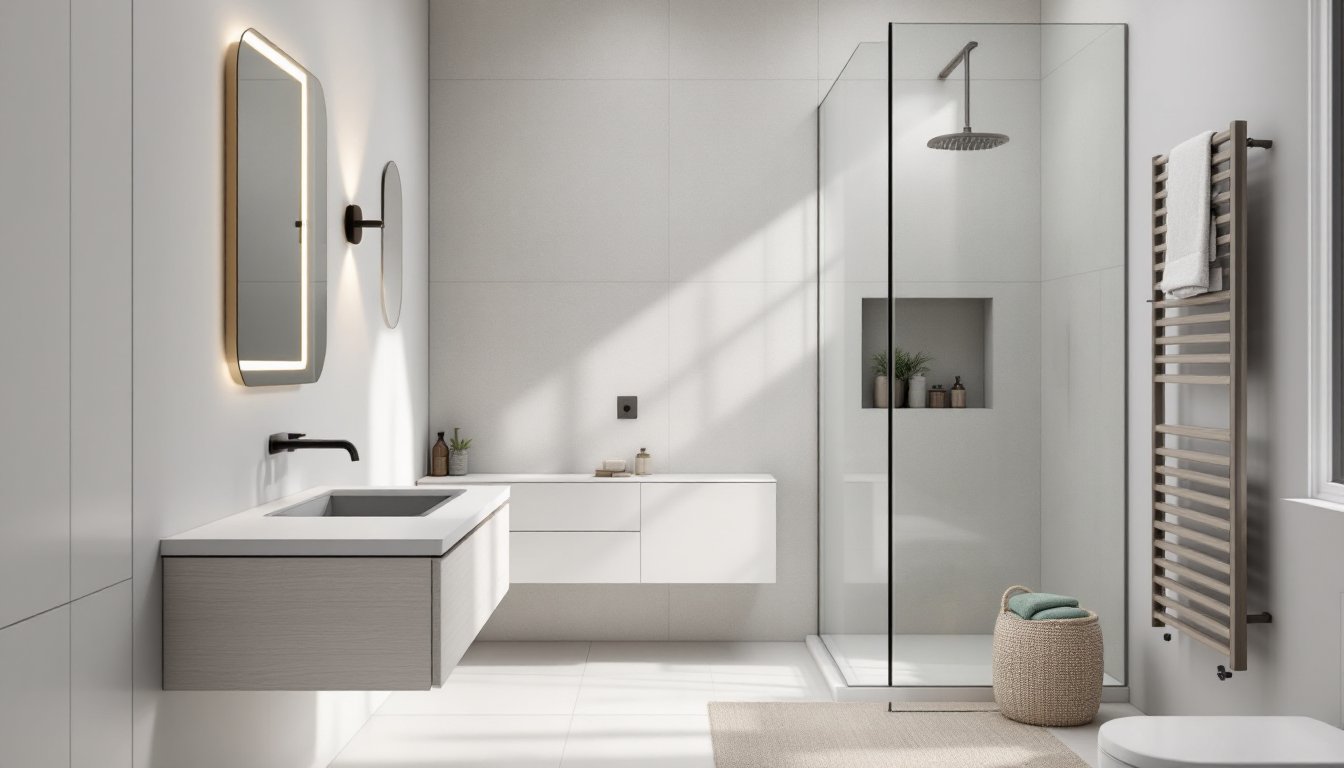
Modern bathroom design starts with the fixtures themselves. Wall-mounted vanities, floating toilets, and slim-profile sinks create an uncluttered foundation that makes even smaller bathrooms feel spacious. These pieces sit away from the floor, exposing wall and tile below, a simple visual trick that opens up the space and makes cleaning easier.
Wall-mounted faucets are essential to this aesthetic. Choose single-spout or minimalist two-handle designs in matte black, brushed nickel, or stainless steel. These finishes won’t show water spots the way polished chrome does, and they’re easier to maintain long-term. When selecting fixtures, look for ones rated for your local water pressure, typical residential systems run 40–60 PSI, but older homes may differ.
Showerheads matter too. Rainfall or low-profile square heads in matching metals reinforce the clean-lines theme. If you’re replacing an existing showerhead, the rough-in (the plumbing connection behind the wall) is usually already in place, making this a straightforward swap. Most retrofit kits cost $30–$150 and install in minutes with basic wrenches.
Glass shower enclosures, ideally frameless or with minimal metal framing, replace busy shower curtains. This opens the visual field and lets tile or wall color shine through. Frameless glass still needs a durable sealant and regular maintenance, but the trade-off in aesthetics is worth it for most modern bathrooms.
Smart Bathroom Technology for Everyday Convenience
Smart features in the bathroom are no longer gimmicks, they’re practical upgrades that improve daily function. Motion-sensor faucets reduce water waste and are particularly useful if kids or older family members use the bathroom. They typically cost $100–$300 and fit standard plumbing connections, though some models require a low-voltage wire to a nearby outlet for the sensor.
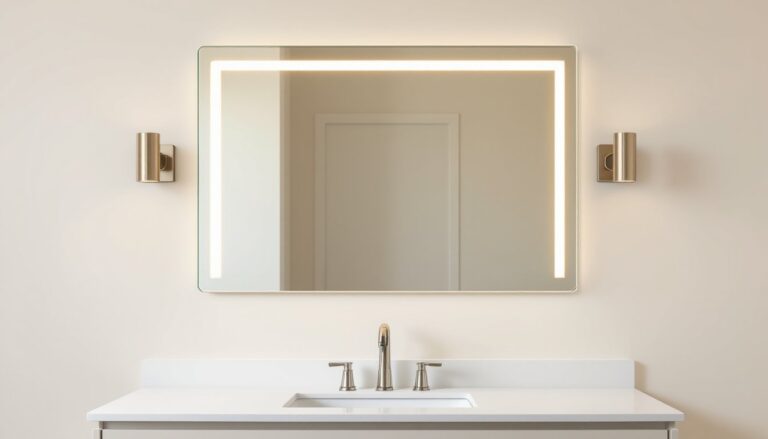
Mirrors with integrated LED lighting and defog functions are increasingly popular. These units provide even, shadow-free illumination without needing separate wall sconces, a huge bonus in narrow bathrooms. Models range from $150 to $800 depending on size and features. Installation requires careful attention to electrical codes: lights above the sink must be GFCI-protected per the National Electrical Code (NEC), and they must be at least 36 inches from tub or shower edges.
Towel warmers add genuine comfort without very costly. Hard-wired models cost $200–$500 installed: plug-in versions run $50–$150 but take up an outlet. Verify your bathroom circuit capacity before adding one, a 120-volt warmer draws 750–1500 watts.
Ventilation fans with humidity sensors automatically kick on when moisture rises, preventing mold and mildew growth. Upgrading from a standard 50-CFM (cubic feet per minute) fan to a sensor-equipped 80–100 CFM model costs roughly $150–$300 and cuts installation time to a couple hours. Proper ductwork, straight runs, not kinked flex duct, ensures these fans work as designed. Resources like Dwell showcase homes where smart design and technology merge seamlessly.
Color Palettes and Materials That Define Modern Style
Color choice sets the entire mood in a modern bathroom. Soft, sophisticated palettes dominate 2026, think soft whites, warm grays, deep charcoals, and muted earth tones. The trick is avoiding sterile all-white rooms by introducing textured materials and a single accent color or metallic finish.
Neutral Tones and Accent Walls
Neutral walls create a calm, spa-like foundation. Use high-quality bathroom paint, brands formulated for moisture resistance dry to a satin or eggshell finish that wipes clean and resists mildew better than standard interior paint. Plan for one coat of primer plus two coats of finish on properly prepped drywall.
Accent walls work brilliantly in modern bathrooms when done restraint. A deep sage green, charcoal, or warm navy behind the vanity draws the eye without overwhelming. Apply wallpaper or paint to just that wall, keeping others neutral. If you’re considering wallpaper, use vinyl or vinyl-coated stock rated for high-moisture environments. Paper-backed wallpaper will bubble and peel in a steamy bathroom, a frustrating and costly mistake.
Material selection is equally critical. Large-format tiles (12×24 inches or larger) in neutral tones reduce grout lines, creating seamless, modern visuals. Matte or honed finishes (not glossy) feel more contemporary and are less slippery underfoot. Porcelain tiles are durable and water-resistant: natural stone (marble, slate) demands sealing and more upkeep but offers luxury appeal.
Flooring should match wall finishes. Light gray or warm white porcelain tiles, concrete-look tiles, or even polished concrete floors pair with neutral walls to keep the space cohesive. If budget allows, heated floor mats under tile add genuine comfort without visible hardware. Installation requires thinset mortar rated for wet areas and grout sealing afterward, non-negotiable steps that prevent water intrusion and mold. Remodelista offers curated examples of how materials and color harmonize in well-designed spaces.
Lighting Design for Function and Ambiance
Lighting in modern bathrooms balances task and ambient needs. Poor lighting leads to shaving nicks, makeup mishaps, and a dingy feel: too much harsh light kills the spa vibe you’re after.
Task lighting at the mirror is non-negotiable. LED strips flanking the mirror, or an integrated mirror with built-in LEDs, provide shadow-free illumination for grooming. Color temperature matters: 4000K (cool white) mimics daylight and is ideal for makeup and shaving, while 2700K (warm white) flatters at night and in relaxation zones. Dimmable fixtures add flexibility, letting you shift from bright task mode to soft evening ambiance.
Ambient lighting softens the overall space. A ceiling-mounted flush or semi-flush fixture (recessed downlights work too) should be dimmable and 3000K or warmer. Pair it with a subtle wall sconce or two for layered, modern appeal. Avoid bright spotlight effects that age skin or feel clinical.
Vanity lights must be GFCI-protected and positioned at least 36 inches from tub or shower per NEC code. Verify your bathroom’s circuit load before adding fixtures, a typical 20-amp circuit can handle several LED lights, but older bathrooms may need an electrician’s review. The wiring and outlet layout aren’t something to improvise.
Natural light, if available, is your secret weapon. A frosted or privacy window above the toilet or on an exterior wall brightens the space naturally while maintaining privacy. If a skylight fits your roof structure, that’s premium daylight without privacy loss, though installation requires structural vetting and proper flashing to prevent leaks.
Storage Solutions That Hide Clutter
Modern bathrooms thrive on hidden storage. Open shelving and visible clutter undermine the clean aesthetic, so built-in solutions are worth the planning effort.
Wall-mounted cabinets above the toilet or beside the vanity use vertical space efficiently. Choose ones with soft-close hinges and handle-less or minimal-handle designs to match your fixture aesthetic. Recessed medicine cabinets are another option, they recess into wall cavities between studs, taking zero floor or counter space. Installing one typically requires cutting through drywall and tile, so it’s best done during renovation: retrofitting into existing tile is messy and risky.
Drawers in floating vanities hide everyday items, toothbrushes, medications, styling tools, and keep countertops bare. If your vanity doesn’t have drawers, under-sink organizers with pull-out baskets maximize awkward plumbing spaces. A 24-inch vanity with minimal overhang feels modern: 36–48 inches offers more storage and counter space without looking bulky.
Niches carved into shower walls hold soap, shampoo, and razors without cluttering ledges. Building a niche requires studs to frame, waterproofing, and careful tile work, a moderate DIY project if you’re comfortable with demolition and tiling, or a job for a pro if you’re uncertain. Prefab niche boxes ($30–$100) simplify this considerably and integrate well into tile installations.
Tall, narrow linen towers next to the vanity store towels and supplies vertically. These work in rooms with limited floor space and maintain the minimalist look. Pair with matching baskets on lower shelves to contain smaller items. Houzz’s modern bathroom gallery demonstrates how effective storage blends into design rather than dominating it.
Conclusion
Modern bathroom design in 2026 prioritizes clean aesthetics, smart efficiency, and honest materials over fleeting trends. Whether you’re overhauling the whole space or tactically upgrading fixtures, lighting, and storage, the principles remain consistent: minimize visual clutter, choose quality finishes in neutral tones, embrace functional technology, and hide everyday items. Start with one or two key upgrades, perhaps a floating vanity and new lighting, and build from there. Your modern bathroom will reward you with daily comfort and lasting appeal.