Table of Contents
ToggleLiving in a 12×16 tiny house, roughly 192 square feet of total floor space, requires thoughtful planning and intentional design choices. Whether you’re downsizing, building a guest cottage, or creating an affordable accessory dwelling unit (ADU), a compact footprint forces you to prioritize what truly matters. The good news? Smart furniture selection, vertical thinking, and strategic lighting transform a tiny space into something that feels spacious, comfortable, and genuinely livable. This guide walks through proven strategies for maximizing your 12×16 interior without cramped compromises or Pinterest-perfection pressure.
Key Takeaways
- A 12×16 tiny house interior thrives on scaled furniture, vertical storage, and layered lighting that make compact living feel spacious without compromise.
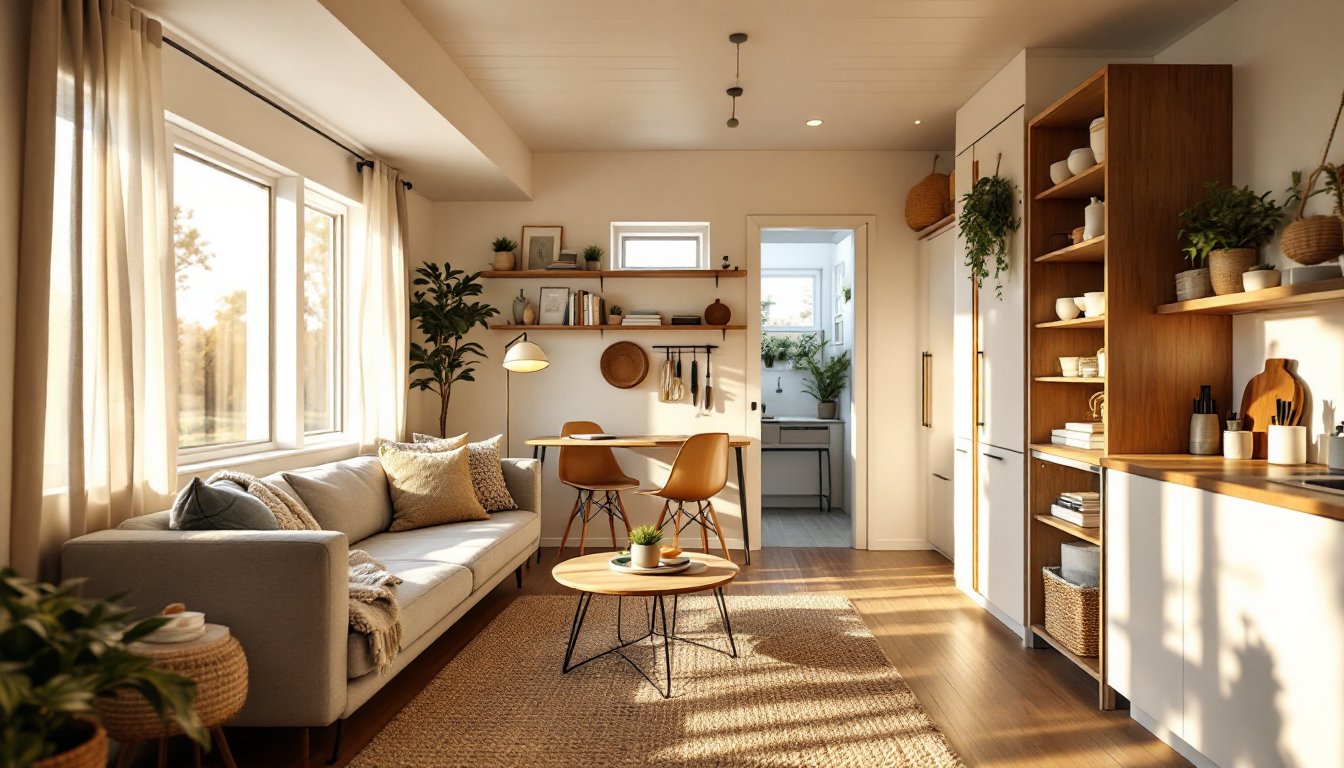
- Keep 40–50% of floor space visible and use furniture with legs rather than solid bases to create an airy, flowing layout.
- Floor-to-ceiling shelving, floating shelves, and wall-mounted organizers maximize storage while preserving sightlines in tight footprints.
- Light colors, mirrors opposite windows, and layered lighting (ambient, task, and accent) visually expand a 12×16 space and prevent claustrophobic feelings.
- Define multiple zones using area rugs, pendant lights, open shelving, and furniture placement rather than hard walls to maintain openness.
- Prioritize quality furniture and decor that serves double duty—beautiful and functional—while avoiding clutter through intentional curation and a ‘one-in-one-out’ organizational rule.
Space-Saving Furniture And Layout Strategies
The foundation of any tiny house interior is choosing furniture scaled to match your square footage. A standard sofa (often 84–90 inches long) will dominate a 12×16 footprint, while a 72-inch sectional or loveseat anchors the space without swallowing it whole. Measure doorways, windows, and wall lengths before buying anything, a piece that fits the store showroom might not angle through your entry or leave walkable floor space.
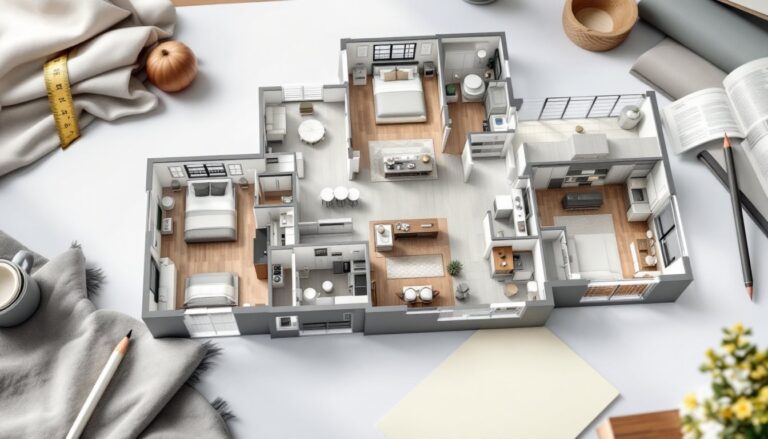
Layout follows the “furniture-first” rule: place your largest pieces (bed, sofa, dining table) before filling in smaller items. In a 12×16 footprint, consider an open floor plan with subtle zone boundaries rather than hard walls. A Murphy bed or wall-mounted desk folds away when not in use, freeing daytime living area. Nesting tables, drop-leaf desks, and stackable chairs expand functionality without permanence.
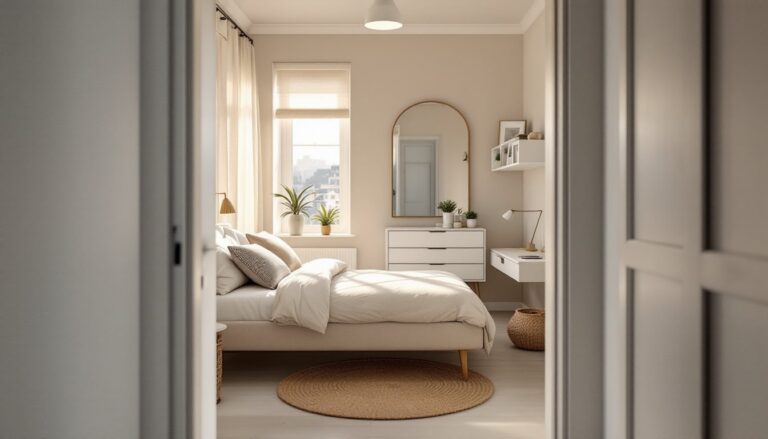
Floor space matters as much as furniture itself. Keeping 40–50% of your floor visible (versus furniture-heavy layouts) creates the psychological illusion of more room. Furniture on legs, rather than skirted or solid bases, lets light and sight lines flow underneath, making the space feel airier. Avoid pushing all furniture to the walls: a floating arrangement in the center actually creates better flow and zones in a small layout.
Vertical Storage Solutions For Compact Living
In a 12×16 interior, walls are your real estate. Floor-to-ceiling shelving, tall narrow cabinets, and wall-mounted organizers reclaim storage without eating floor space. Floating shelves (secured to wall studs with appropriate brackets rated for your load) hold books, decor, and essentials while maintaining sightlines. In kitchenettes, magnetic strips for knives, pegboards for tools, and under-cabinet hooks hang frequently used items.
Over-the-door organizers, corner shelving units, and vertical file systems work harder than traditional dressers or cabinets. Crawlspace or loft storage above sleeping areas (if your ceiling height permits) keeps seasonal items and luggage out of the main living zone. Building custom shelving around existing studs or investing in modular wall systems from brands like IKEA gives you flexibility as your needs evolve.
Closet organization is non-negotiable in a tiny house. Double-hang rods, shelf dividers, and slim velvet hangers maximize hanging space. Under-bed rolling drawers, vacuum-seal bags, and clear storage bins let you see what you own without opening every container. The goal: every inch of vertical space earns its keep, and nothing hides in a corner because you forgot it existed.
Color Palettes And Lighting To Expand Your Space Visually
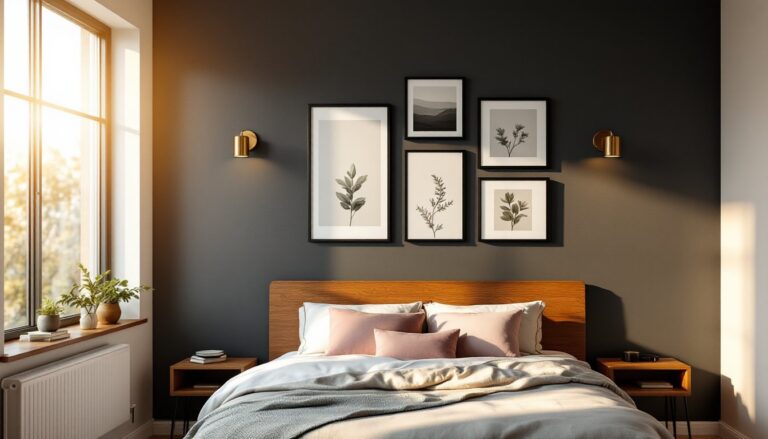
Light colors, soft whites, warm grays, pale blues, reflect light and make walls recede visually, expanding the perceived room size. A monochromatic or analogous color scheme (colors next to each other on the color wheel) feels cohesive and less choppy than a rainbow of accents. One accent wall in a richer tone (sage green, charcoal, muted terracotta) adds personality without overwhelming: keep surrounding walls neutral to anchor the palette.
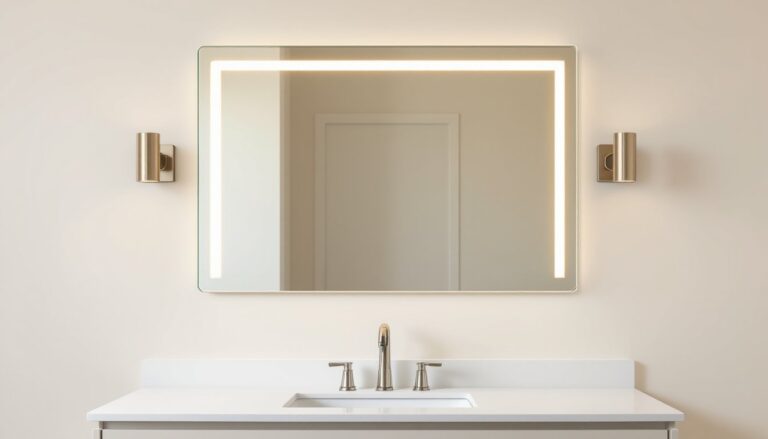
Lighting strategy separates lived-in from claustrophobic. A single ceiling fixture casts shadows and flattens a room. Layer three types of light: ambient (ceiling fixture or track lights), task (desk or bedside lamps), and accent (wall sconces, string lights). Under-cabinet LED strips in the kitchen brighten work surfaces and add visual depth. Mirrors opposite windows or light sources bounce natural light throughout the space, instantly brightening dark corners.
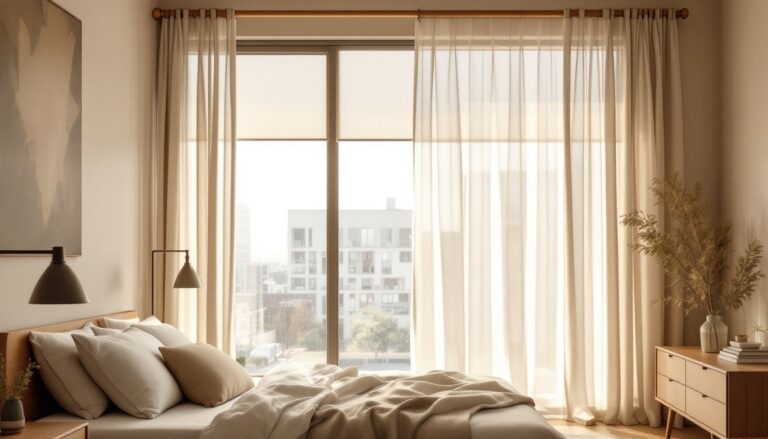
Window treatments matter too. Sheer curtains or cellular shades (mounted inside the window frame rather than outside) maximize light while maintaining privacy. Heavy drapes eat visual space: instead, light-colored linen or simple blinds keep the window from shrinking. If your 12×16 space has limited natural light, consider full-spectrum LED bulbs (around 4000K–5000K color temperature) to mimic daylight and reduce the sense of cramped, dim living.
Multi-Functional Zones And Room Dividers
A 12×16 interior often combines sleeping, living, eating, and working functions under one roof. Define zones without hard walls using furniture placement, area rugs, lighting, and subtle visual breaks. A rug under the “living area” anchors that zone: a different rug under the dining nook signals a shift in function. Pendant lights suspended over a desk or dining table create overhead boundaries that delineate space without obstructing sightlines.
Room dividers, open shelving, curtain rods with lightweight fabric panels, or sliding barn doors, separate zones while maintaining openness. A tall bookcase angled at 45 degrees carves out a sleeping nook without a wall, and its permeability lets light and air flow through. Avoid solid dividers (solid partitions, heavy curtains) that chop the space into tiny caves: semi-transparent or open solutions preserve the sense of spaciousness.
Furniture arrangement itself divides zones: the sofa back faces the bedroom area, the dining table sits perpendicular to the kitchen, the desk tucks into a corner with a view. Each zone should have one defining piece (bed, sofa, table) and supporting elements (nightstand, coffee table, desk chair). This strategy lets a single room feel like multiple, intentional living spaces rather than one jumbled area.
Practical Decor And Organization Tips
Clutter kills the illusion of space. Adopt a “one-in-one-out” rule: each new item replaces something you’re releasing. Closed storage (cabinets, bins, baskets) hides daily clutter, while open shelving displays only curated, organized items, think art books, matched dishware, plant arrangements. A small dish rack, utensil holder, or mail sorter keeps everyday items visible but contained.
Decor in a tiny house serves double duty: it’s beautiful and functional. Wall-mounted art or a gallery wall adds personality without floor footprint. Large single pieces (one oversized print) feel less chaotic than a grid of small frames. Plants bring life to vertical space, wall-mounted planters, hanging macramé, or a tall floor plant in a corner add oxygen and softness without eating table space.
Textural variety (linen, wool, wood, ceramic) prevents a sterile, cramped feeling. A chunky knit throw, woven baskets, a wood cutting board on open shelving, these details feel intentional and lived-in. Lighting fixtures also become decor: an attractive pendant above the kitchen sink, vintage-style wall sconces, or a sleek desk lamp double as visual interest. Finally, avoid the impulse to fill every surface or hang every wall. Breathing room, empty wall space, clear countertops, makes the tiny house feel designed and calm, not pressured into productivity.
Creating Comfort And Personal Style In Tiny Houses
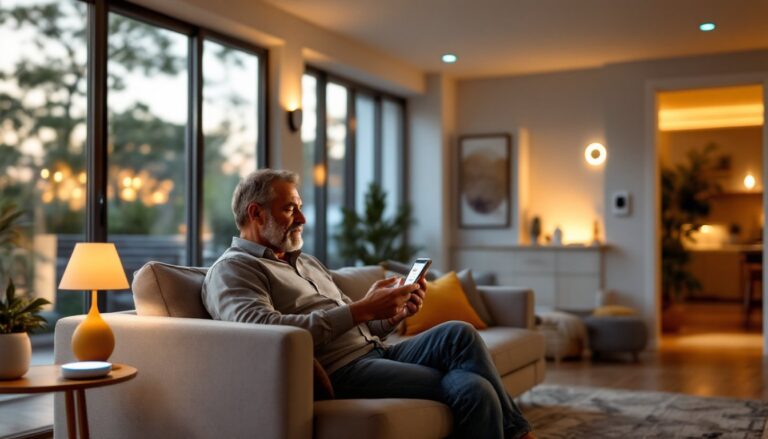
Living small doesn’t mean living small emotionally. Prioritize comfort layers, a quality mattress, soft bedding, a cozy seating nook, because you’ll spend significant time in those moments. A well-chosen sofa or reading chair feels like home: a cheap, uncomfortable one breeds resentment. Bedroom lighting (dimmer switches or smart bulbs) lets you adjust the mood from energetic mornings to restful evenings without a jarring on-off switch.
Personal style thrives in constraints. Narrow your color palette to three core colors plus neutrals, then layer in accessories, plants, and art that reflect your interests. Whether that’s travel souvenirs, book collections, art prints, or vintage finds, a curated, intentional selection feels more sophisticated than a scattered mix. Display your favorite items on open shelving or a small gallery wall: this isn’t about minimalism for its own sake, it’s about surrounding yourself with things you genuinely love.
Temperature and air quality matter in a compact 12×16 space. Ensure your HVAC system (or portable AC/heater) handles the square footage: a tiny room can overheat or overcool quickly. An inexpensive humidity meter (under $20) prevents mold issues in tight spaces. Good ventilation in the bathroom and kitchen, via fans or operable windows, keeps moisture from condensing on walls and windows. These invisible comforts make tiny living genuinely pleasant rather than a grim endurance test. Resources like Apartment Therapy and IKEA Hackers offer thousands of real small-space transformations and creative modifications to inspire your own project.
Conclusion
A 12×16 tiny house interior succeeds through intentional choices: scaled furniture, vertical storage, layered light, and defined zones that each serve a purpose. The constraint forces you to buy less, choose better, and truly understand how you live. Done thoughtfully, your tiny house becomes a model of efficiency and comfort, a place that feels spacious not because it’s large, but because every element earns its place. Start with one strategy (better furniture arrangement or upgraded lighting), measure twice, and let your space evolve. Your neighbors might be jealous of the simplicity.