Table of Contents
ToggleYour bedroom should feel like a retreat, a place where stress melts away and rest comes naturally. Biophilic design, the practice of bringing natural elements into indoor spaces, does exactly that. Instead of relying solely on artificial lighting and synthetic materials, biophilic bedrooms tap into our inherent connection to nature, creating environments that genuinely promote better sleep and mental clarity. Whether you’re drawn to greenery, natural light, or the sound of water, these seven nature-inspired ideas will help you transform your bedroom into a personal sanctuary that feels as refreshing as a forest walk.
Key Takeaways
- Biophilic design bedroom principles are rooted in research showing that natural elements reduce stress, lower blood pressure, and improve sleep quality.
- Low-maintenance plants like pothos, snake plants, and ZZ plants are ideal for bedrooms because they thrive in moderate light and irregular watering while improving air quality.
- Natural light exposure regulates your circadian rhythm and supports better sleep, so maximize window views and keep windows clean for unobstructed outdoor connection.
- Swap synthetic bedding for natural materials like linen or Egyptian cotton and incorporate wood furniture to create a sensory biophilic environment that regulates temperature naturally.
- A single well-placed water feature or nature sound app creates calming auditory benefits without overstimulating your biophilic design space.
- Start with one or two simple changes—such as adding a plant cluster, upgrading to natural bedding, or installing a small fountain—and gradually build your sanctuary for noticeable sleep and mental clarity improvements.
What Is Biophilic Design and Why Your Bedroom Needs It
Biophilic design isn’t a trendy interior decorator buzzword, it’s rooted in the idea that humans are hardwired to connect with nature. Decades of research shows that exposure to natural elements reduces stress, lowers blood pressure, and improves sleep quality. Your bedroom is where you spend a third of your life, making it the perfect space to harness these benefits.
Unlike generic interior design trends, biophilic design focuses on function over aesthetics. You’re not just adding plants for looks: you’re creating an environment that supports your biology. Natural light regulates your circadian rhythm, living plants improve air quality, and natural materials like wood and stone create a grounded, calming atmosphere. The goal is to design a space that feels alive, one that responds to your needs the way nature does.
Applying biophilic principles to your bedroom doesn’t require expensive overhauls. Many changes are simple, affordable, and require only basic DIY skills. You might repaint with earth-tone colors, swap synthetic bedding for natural fibers, or position a single shelf of low-maintenance plants. Small shifts compound into a genuinely restorative space.
Bringing Living Plants Into Your Bedroom Space
Living plants are the most straightforward way to inject biophilic energy into your bedroom. They clean the air by filtering out toxins, release oxygen at night (yes, some species), and provide visual interest without clutter. The trick is choosing plants that thrive in typical bedroom conditions, moderate light, inconsistent watering, and average humidity.
Start by assessing your bedroom’s natural light. North-facing windows get indirect light year-round: east-facing rooms get gentle morning sun: south-facing spaces are brightest. This matters because the wrong plant in the wrong spot will wilt, defeating the purpose. Place taller plants on the floor near windows or in corners, mid-sized plants on dressers or nightstands, and trailing varieties on shelves or hanging planters.
One practical tip: cluster plants together rather than scattering them. A small grouping near a window creates a focal point and naturally raises local humidity, benefiting all the plants. Use a simple ceramic or terracotta pot with drainage holes, never seal drainage: it causes root rot. If your window sills aren’t perfect for drainage, place a saucer or plant tray underneath to catch excess water.
Best Low-Maintenance Plants for Bedroom Environments
Pothos (Devil’s Ivy) tolerates low light and irregular watering. It grows quickly and can cascade from a shelf or climb a small trellis. Water when the soil feels dry 1–2 inches down: typically every 7–10 days.
Snake Plant (Sansevieria) is nearly indestructible and actively releases oxygen at night. It prefers bright, indirect light but survives in lower conditions. Water sparingly, only when soil is completely dry, roughly every 2–3 weeks.
ZZ Plant handles low light and drought like a champ. Its glossy, architectural foliage adds visual interest without needing fussy care. Water every 2–3 weeks during the growing season.
Philodendron comes in trailing or climbing varieties and tolerates inconsistent light. It’s forgiving with watering (every 5–7 days) and grows steadily without demanding attention.
Rubber Plant is a showstopper if your bedroom has bright, indirect light. Its large, sculptural leaves create a strong visual statement. Water when the top inch of soil is dry: it’s prone to root rot if overwatered.
Start with 2–3 plants and get comfortable before expanding your bedroom garden. Water them together on a set day each week: mark it on your calendar. This routine prevents the classic DIY mistake of erratic watering that kills more plants than neglect does.
Natural Light and Window Treatments That Connect You to the Outdoors
Natural light is the bedrock of biophilic design. Morning sunlight resets your circadian rhythm, suppresses melatonin, and wakes you naturally. Evening exposure to natural light helps regulate sleep-wake cycles. Your bedroom’s window treatment should balance light exposure with privacy and thermal control, no easy task, but doable.
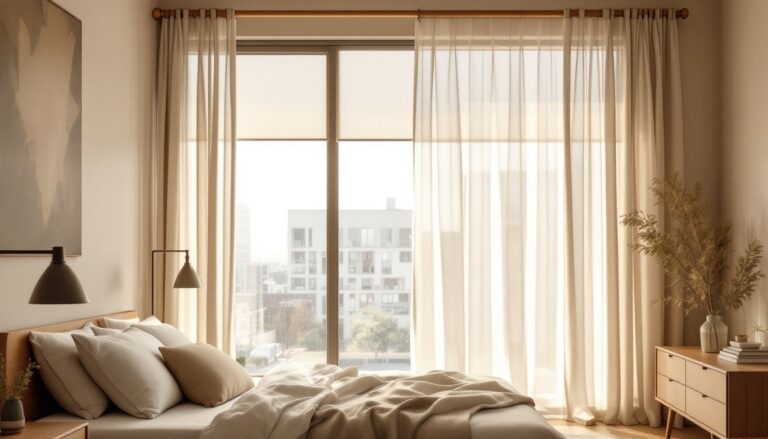
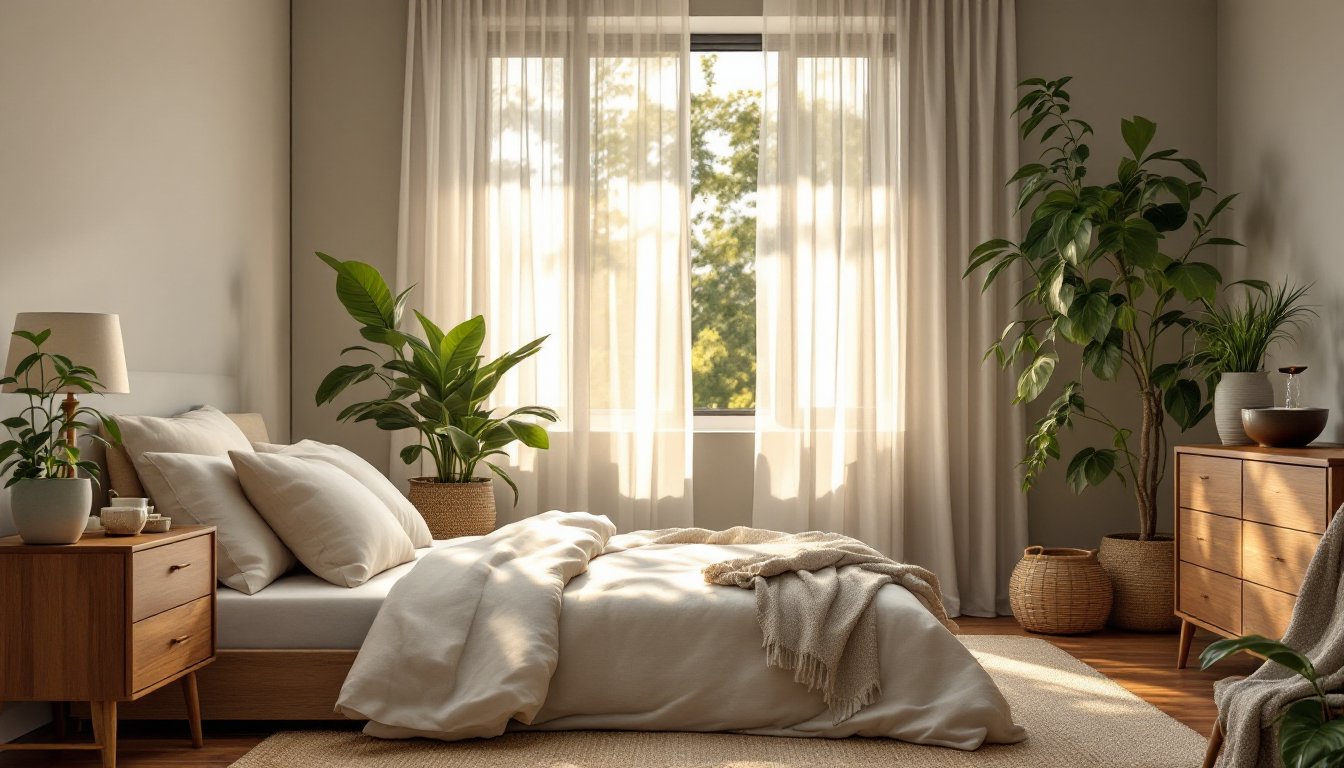
Sheer curtains or linen panels diffuse harsh light while letting you see outside. They’re breathable, regulate temperature better than heavy fabrics, and feel softer underfoot if they puddle slightly on the floor. Hang them high and wide (rods should extend beyond the window frame) to maximize perceived light and space.
If privacy is critical, cellular shades with a honeycomb structure provide insulation while filtering light. They come in blackout, room-darkening, and sheer options. For maximum biophilic benefit, choose lighter colors or semi-sheer styles that don’t completely block the outside view.
The most overlooked move: keep your windows clean. Dirt and dust scatter light and obscure your view of trees, sky, or landscape. Wipe them monthly, inside and out. It costs nothing and immediately improves the light quality flooding your room. Practical biophilic design often comes down to this, maintaining your connection to the outdoors, not buying new stuff. Consider positioning your bed or seating to frame a view, even if it’s just neighboring trees or sky. Waking to that sight is far more restorative than staring at a blank wall.
Incorporating Natural Materials and Textures Into Your Design
Natural materials anchor biophilic design. Wood, stone, leather, linen, and wool carry the essence of their origins, creating a sensory experience that synthetic fabrics simply can’t match. Your goal isn’t to fill your bedroom with expensive reclaimed barn beams: it’s to swap out synthetic elements incrementally.
Start with bedding. A linen duvet and cotton pillowcases feel cooler, breathe better, and age beautifully. Linen wrinkles, that’s part of its charm and practicality. Real linens regulate temperature naturally, which is why they’ve been used for centuries. If linen feels too textured, Egyptian cotton (400+ thread count) offers softness with durability. Avoid polyester microfiber that feels silky but traps heat and moisture.
Wooden furniture grounds a room biophilically. A solid hardwood nightstand or bed frame (oak, walnut, cherry, or pine) is more durable and feels warmer than particle board or MDF. If replacing furniture isn’t feasible, swap out your nightstand’s synthetic lamp for one with a wood or ceramic base. These small changes accumulate.
Textiles matter equally. Throw blankets in wool, cotton, or linen blend add warmth and visual texture. Wool naturally regulates temperature and resists wrinkles and stains, ideal for a lived-in bedroom. A simple jute or sisal rug defines a seating area and brings earthy texture underfoot. Avoid overly shiny, plastic-y synthetics: they feel sterile.
Color choices reinforce biophilic principles. Walls painted in soft greens, warm grays, or muted terracottas evoke nature without demanding constant attention. These aren’t trendy hues, they’re restful because they mirror landscapes and forest light. If painting walls feels like a big commitment, start by introducing natural-colored textiles and observe how the space shifts psychologically.
Water Features and Nature Sounds for Better Sleep
Water features, both visual and auditory, deepen biophilic design in ways many DIYers overlook. The sound of flowing water masks ambient noise (traffic, neighbors, HVAC hum) and triggers a primal relaxation response. A small tabletop water fountain is the simplest option. Position it on a dresser or shelf away from electronics and bedding. Water droplets create humidity, but drainage trays prevent damage.
Choose a fountain with adjustable flow: soft trickles are more soothing than aggressive cascades. Look for models with whisper-quiet pumps (under 30 decibels). Loud fountains defeat the purpose. Refill weekly and clean the pump monthly to prevent mineral buildup and bacterial growth. Use filtered or distilled water to minimize deposits on the pump and basin.
If a physical fountain feels like overkill, a white noise machine or nature sound app playing gentle water, rain, or forest ambiance serves the same function. Many homeowners combine low-volume nature sounds with a simple fountain, one masks environmental noise, the other provides gentle visual interest.
For those wanting a bolder water element, a small tabletop aquarium with live plants and fish combines movement, sound, and living elements. Fish tanks require more maintenance (weekly water changes, filter cleaning) but create mesmerizing focal points. Even watching fish swim for ten minutes before bed lowers cortisol and heart rate.
The key is moderation. A bedroom packed with multiple fountains, sound machines, and aquariums becomes overstimulating. One well-placed water feature, or nature sounds playing at low volume, is sufficient. Biophilic design should feel calm, not like a nature reserve theme park.
Conclusion
Transforming your bedroom into a biophilic sanctuary doesn’t require permits, contractors, or significant expense. It’s a series of intentional choices: swapping synthetic bedding for linen, positioning plants in the right light, allowing natural sunlight in, selecting durable wood furniture, and adding water sounds. Each addition strengthens your connection to nature and, research consistently shows, improves sleep quality and mental clarity. Start with one or two changes, a plant cluster by the window, linen sheets, or a small fountain. Observe how your bedroom feels and gradually build from there. Your bedroom will thank you, and more importantly, so will your sleep.